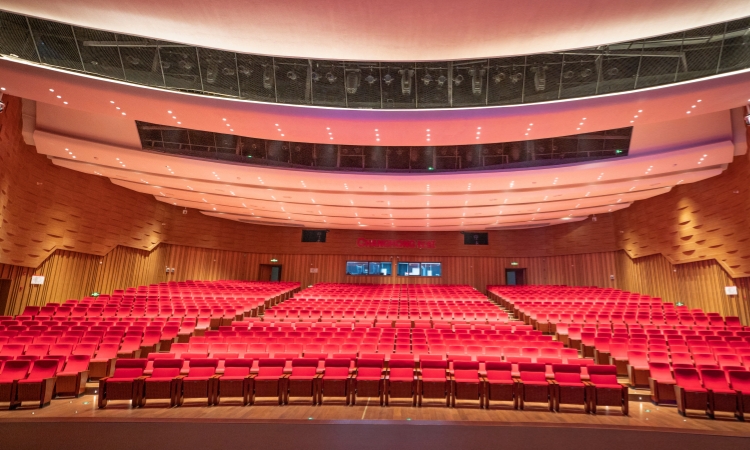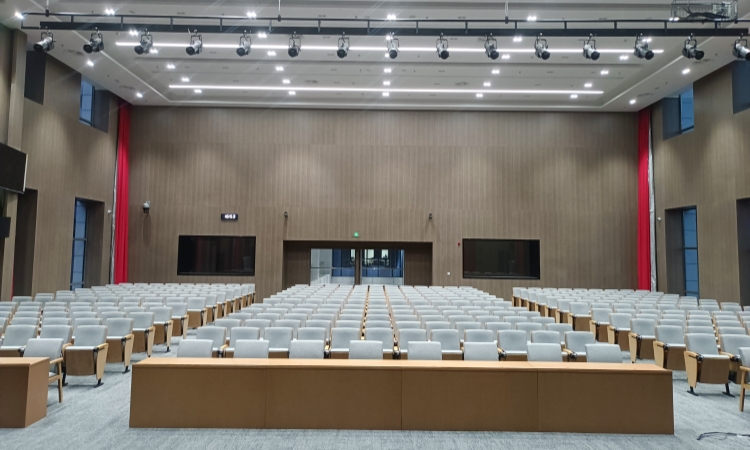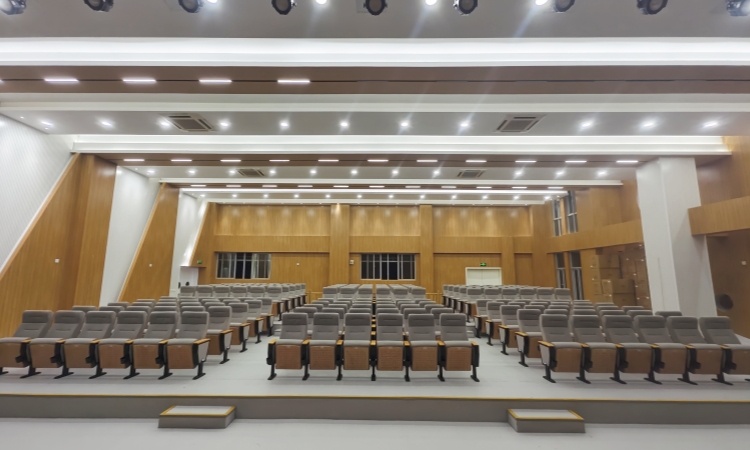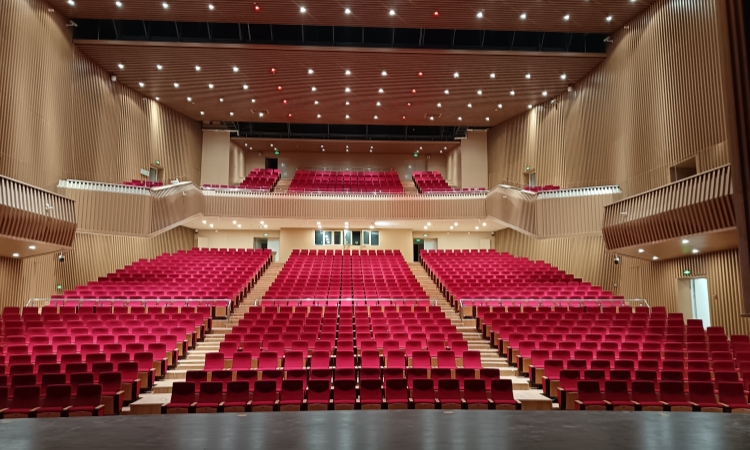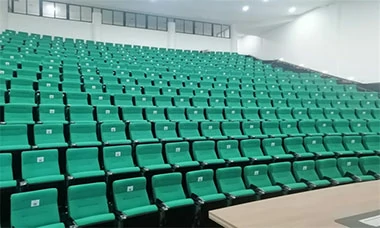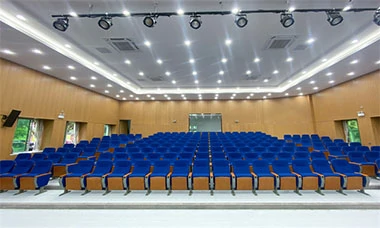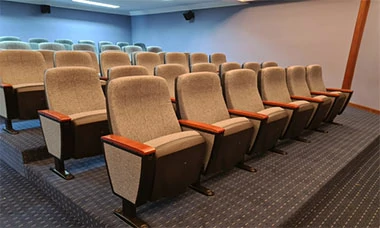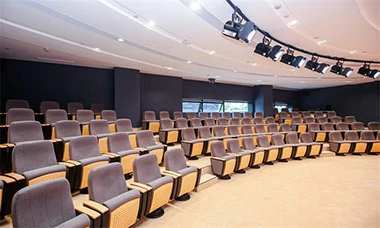


Small lecture halls often feature compact spaces and limited ceiling heights; choosing the wrong fixed seating can lead to obstructed sightlines, maintenance difficulties, or acoustic issues. There is one core principle: prioritize "unobstructed sightline design" and "modular fixed installation" rather than blindly chasing low prices or aesthetics. The following four dimensions will help you avoid common pitfalls.
I. Confirm floor installation and row spacing parameters
Fixed seating in small lecture halls is typically mounted on concrete or steel-framed tiered platforms. Before purchasing, clarify the seat center-to-center distance (typically 520–580mm), row spacing (recommended ≥900mm), and step height (rise per tier ≥120mm). The seat pedestal base must precisely match any embedded fixtures; if the flooring is already finished, prioritize models that use expansion bolts rather than requiring embedded anchors. Some models feature adjustable-height footpads to compensate for construction irregularities—a detail easily overlooked in small spaces.
II. Unobstructed sightlines are crucial
The worst scenario in a small lecture hall is having the back row look at the backs of heads in the row ahead. Suitable fixed seating must employ a vertical sightline design: when the seat is tipped up, the lowest point of the cushion should not fall below the top of the seatback in the row ahead. Opt for tiered seating with a damped, slow-return mechanism; this ensures quiet operation and maintains a gap of ≤50mm between the cushion and backrest when tipped up, keeping sightlines clear. Additionally, the backrest tilt angle should be kept between 10° and 15° to balance comfort with compact row spacing.
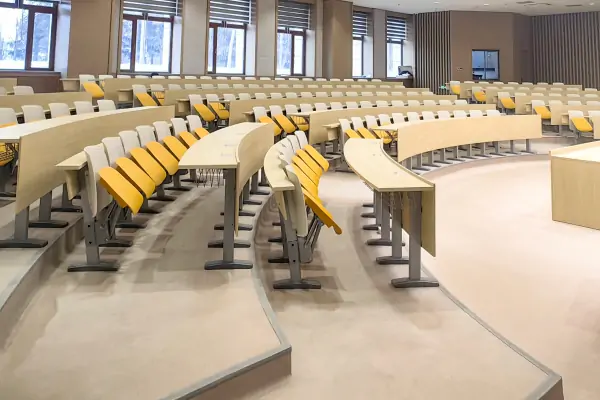
III. Select functional accessories based on needs to avoid redundancy
Small lecture halls often double as multi-purpose rooms or training spaces, so functional add-ons should be chosen precisely. Common high-frequency configurations include integrated folding writing tablets (recommended load capacity ≥30kg), side cup holders, and mesh storage baskets. For foreign language training or voting scenarios, consider adding concealed headphone jacks or mounts for voting units. However, note that each added feature increases the seat depth by 20–50mm; always verify row spacing adjustments with the manufacturer. For fixed auditorium seating, it is advisable to choose models with outward-flaring armrests or armless designs to maximize lateral space.
IV. Materials and After-Sales Support Determine Long-Term Satisfaction
Small lecture halls experience high usage frequency; therefore, the preferred upholstery materials are wear-resistant, flame-retardant fabric or stain-resistant leather, while the cushioning should consist of high-density cold-molded polyurethane foam (with a resilience rate of ≥45%). Support legs and brackets must undergo anti-rust phosphating treatment and feature a wall thickness of at least 2.0mm. When purchasing, ensure the manufacturer provides a 5-year warranty on the frame and a commitment to supply wear-prone parts (such as dampers and writing tablet hinges) for 10 years—this is more critical than price, as restocking for small-scale projects can be difficult later on.
Summary: When selecting fixed seating for small lecture halls, keep these principles in mind: prioritize sightlines, ensure precise row spacing, exercise functional restraint, and secure reliable after-sales support. It is recommended to ask the manufacturer for case studies of similar projects and 1:1 scale seating layout plans; if possible, conduct on-site seating trials. By providing your architectural drawings and intended usage scenarios, a professional team can generate three comparative proposals free of charge, helping you achieve an optimal audiovisual experience within a limited space.