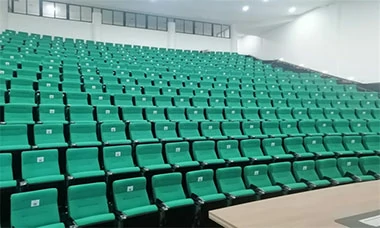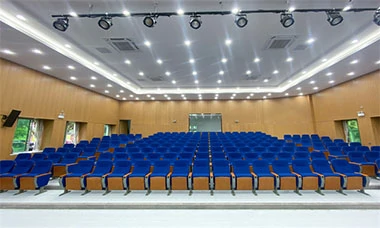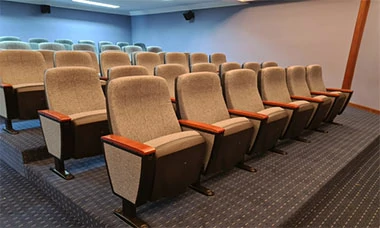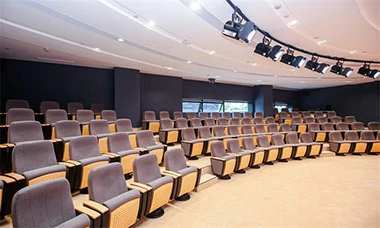


In churches and chapels, the conflict between seating and space is often perplexing: seats are scarce during Sunday worship, while other times the space feels empty and wasteful; weddings and concerts require quick adjustments to the layout. A well-designed church chair is key to improving seating utilization.
1. Movable Church Chairs: Making Space Flexible and Versatile.
Traditional fixed church chairs, while dignified, permanently lock the spatial layout once installed. Movable church chairs have completely changed this:
• Sunday Worship: Neat arrangement ensures maximum seating density.
• Concerts or Performances: Remove front-row seats to create stage space.
• Community Gatherings: Flexible group arrangements facilitate interaction.
• Large Events: Quickly retrieve stackable church chairs from storage to supplement seating.
This "one chair, multiple uses" model allows the same space to perform multiple roles throughout the day, significantly improving seating utilization.
2. Rational Layout, Freeing Up Every Inch of Space.
When scientifically arranging church pews, the following should be considered:
• Optimized aisle width: Avoid excessive width that wastes space, while complying with fire safety regulations.
• Sight design: Utilize curved layouts to eliminate "dead seats" and ensure every chair is used effectively.
• Modular zoning: Open only part of the area for small events, and use all modules for large events, saving operating costs.
3. Stackable church pews: Achieve efficient storage.
When space needs to be freed up, the advantages of stackable church pews become apparent. High-quality stackable chairs can be stacked 10 to 15, occupying only the space equivalent to two chairs laid flat. With wheeled trolleys, one staff member can move and store hundreds of chairs in just a few minutes, truly achieving on-demand allocation and dynamic utilization.
• Comfort and durability determine actual occupancy rate. Improving seat utilization is not just about quantity, but also about actual willingness to sit. When choosing high-quality church benches, consider the following:
• Ergonomic design: A well-proportioned backrest and seat thickness support for extended periods of activity.
• Durable and easy to clean: Wear-resistant, stain-resistant, and fire-retardant fabric, suitable for high-traffic areas.
• Silent casters and anti-slip design: Balancing flexibility and safety.
4. Conclusion: Improving seating utilization isn't simply about cramming more chairs, but about scientifically selecting and flexibly arranging them to maximize space efficiency in different scenarios. From stackable church benches to movable ones, the right chair allows church spaces to accommodate more possibilities.