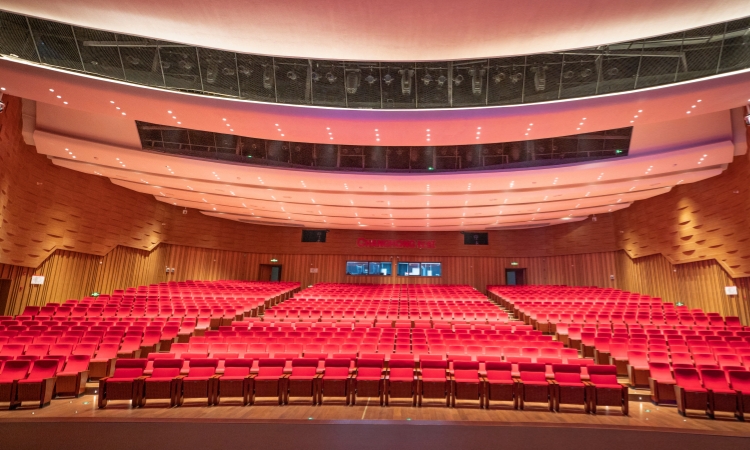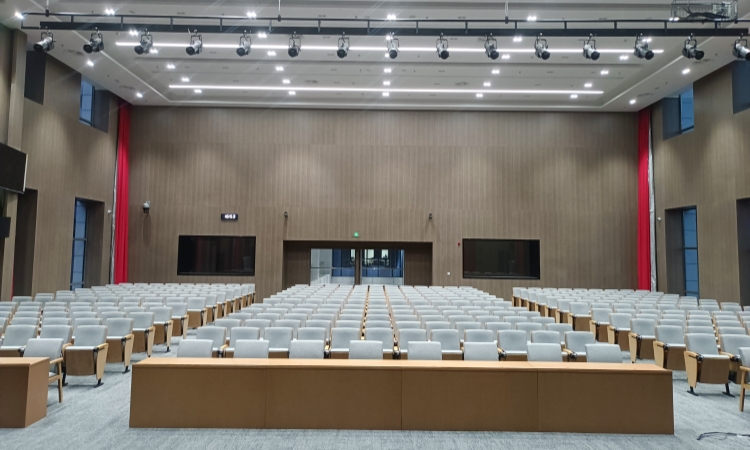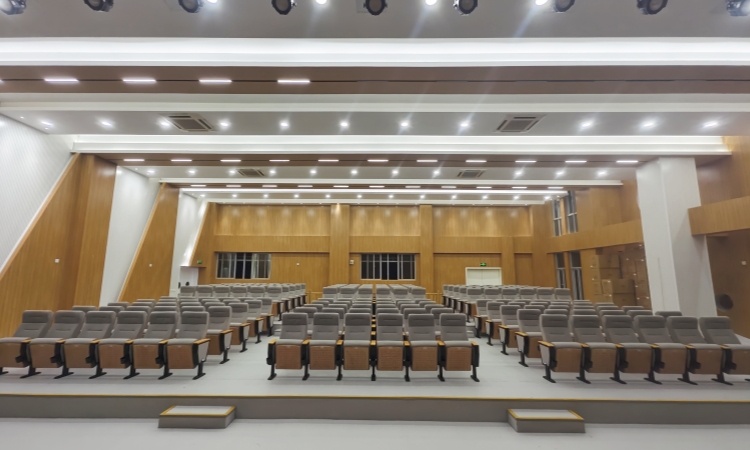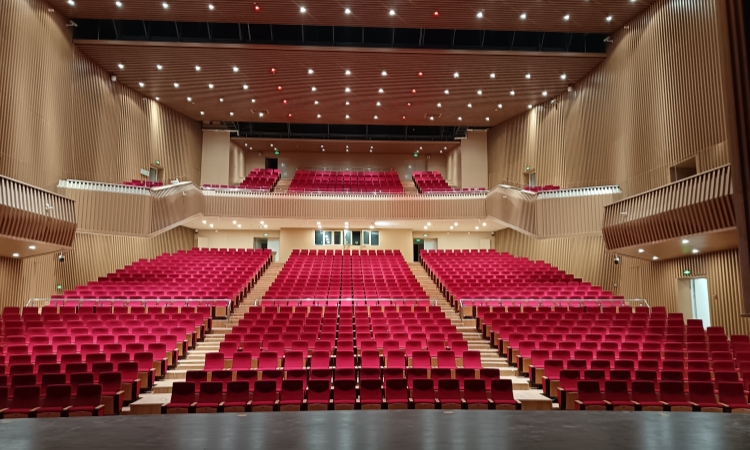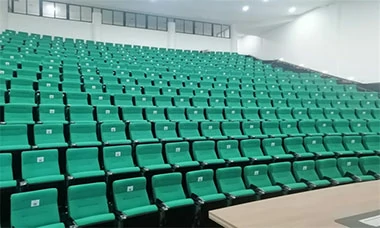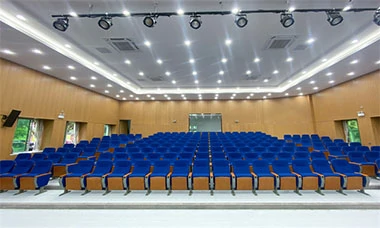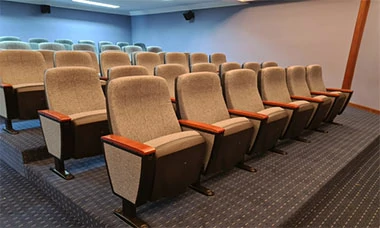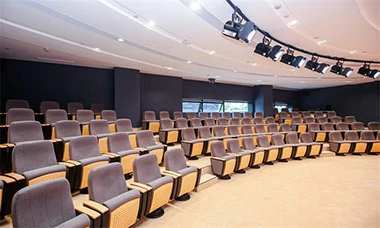


In auditoriums, lecture halls, or theaters, the length of time an audience stays often directly depends on the comfort of the auditorium chairs. A performance or meeting can easily last two or three hours; if the auditorium chairs are uncomfortable, audiences will leave early, and complaints and negative reviews will follow. Do your auditorium chairs truly meet the standards?
I. Ergonomic Design: Ensuring Audience Comfort
The core of auditorium chair comfort lies in ergonomic design. Seat height is generally controlled at 420-450mm to ensure both feet are stably on the ground; seat depth is approximately 430-460mm to avoid pressure on thigh blood vessels; the backrest angle is ideally 100-110° to effectively distribute pressure on the lumbar spine. The lumbar region needs approximately 100-120mm of forward support to conform to the natural curve of the spine. Only meeting chairs that meet these parameters can allow audiences to sit continuously for two hours without back pain.
II. Foam and Fabric: A Balance of Comfort and Durability
The filling materials of the seat cushion and backrest directly determine the seating comfort. High-quality auditorium chairs use high-density cold-foamed molded foam, with a recommended seat foam density of 45-60 kg/m³ and a back foam density of no less than 30-40 kg/m³. The foam's resilience rate should be ≥35%, ensuring it doesn't collapse or deform even after prolonged sitting. For the fabric, flame-retardant B1-grade linen or technical fabric is recommended, as it is wear-resistant and stain-resistant. A moderately firm seat cushion with a sinking amount of 50-60 mm is ideal—too firm and your legs will go numb after twenty minutes; too soft and your lower back will start searching for support after half an hour.
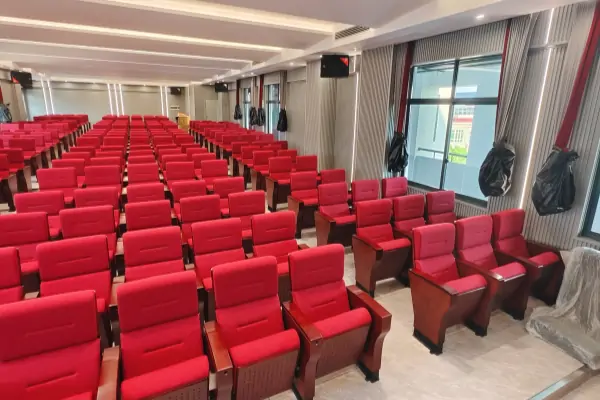
III. Structural Stability and Quiet Details
The steel frame structure of the auditorium seating is crucial. The steel pipe wall thickness should be no less than 1.5 mm, with main load-bearing parts ≥2.0 mm, and the surface should be electrostatically powder-coated for rust prevention. The flip-up mechanism should be equipped with a damping slow-descent device to avoid "clunking" noise affecting the viewing experience. A row spacing of 900-1100mm is recommended to ensure smooth entry and exit for audience members without knee bumps.
Summary
Seating comfort directly determines the length of time audience members stay and the rate at which they turn their heads to look. When purchasing auditorium chairs, please carefully check the ergonomic dimensions, foam density and resilience, structural load-bearing capacity, and noise reduction design—only when these standards are met will audience members be willing to stay.