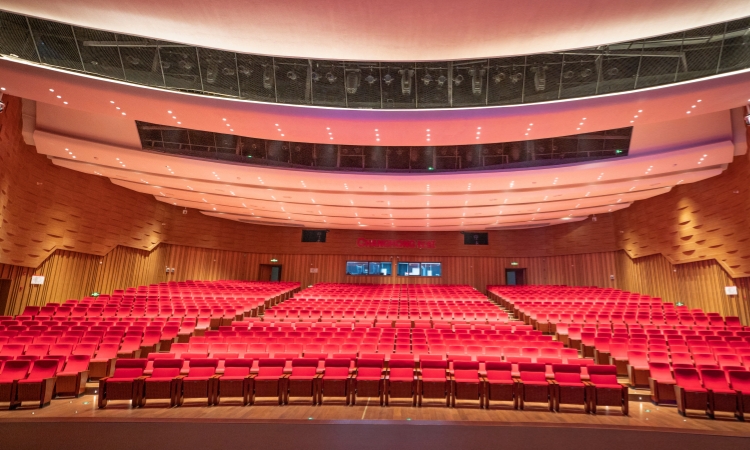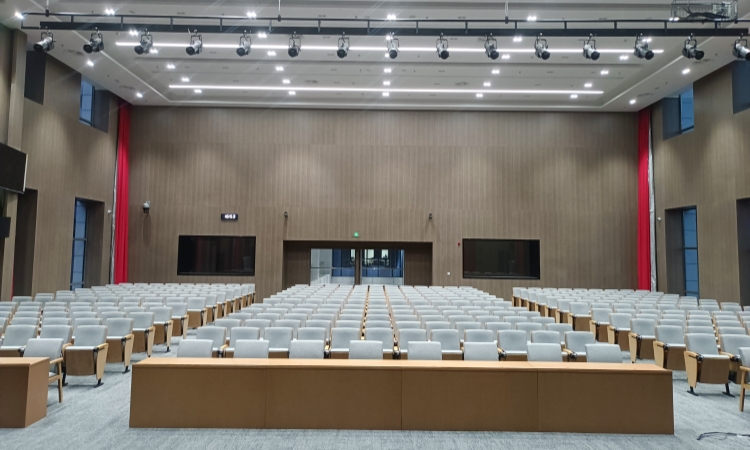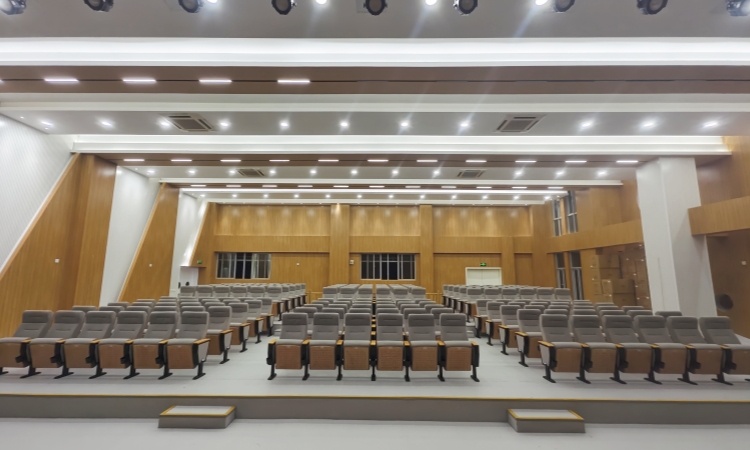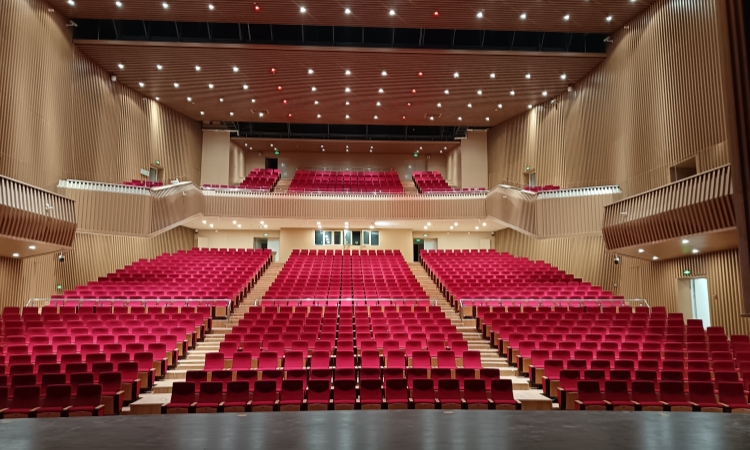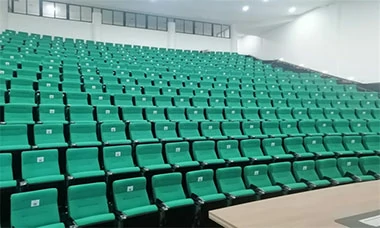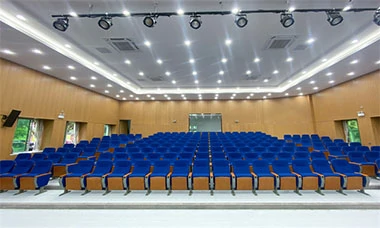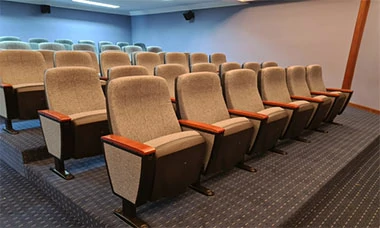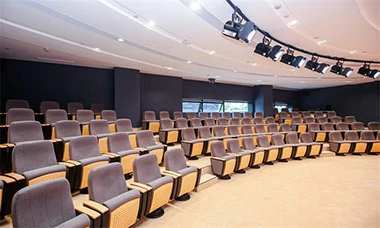


When procuring university lecture hall chairs, the biggest fear is discovering after installation that the seats have slow rebound, loose screws, and are difficult to clean. These core indicators must be assessed beforehand; otherwise, later repair costs will far exceed the budget.
1. Seat Cushion Rebound and Durability: Lecture halls are used for 6-8 classes daily, so the seat cushion foam must pass a 50,000-cycle fatigue test. High-density cold-blown polyurethane foam with an automatic flipping mechanism is preferred. Inquire with the manufacturer: Is the rebound spring in the university fixed chair internally damped or mechanical? The former is quieter but prone to aging, while the latter has a longer lifespan.
2. Writing Tablet Load Capacity and Smooth Folding/Retraction: The writing tablet in the lecture hall fixed chair is crucial for students taking exams and taking notes. Tested performance should show a load capacity of ≥30kg without wobbling; and no sharp noise when folding or retracting. Side-flipping writing tablets or embedded folding boards are recommended to avoid obstructing aisles. Long-tail keywords, such as the pressure resistance standards for fixed seating and writing boards, should be included in the contract appendix.
3. Installation Foundation and Ground Load
University fixed seating must have pre-embedded steel feet or expansion bolts, and each seat must be independently fixed. Note: The installation spacing of tiered classroom seating is typically 500-520mm (wheelbase), and the height of the sight line at the rear row must be ≥120mm. The manufacturer must provide an installation point diagram and ground flatness acceptance standards.
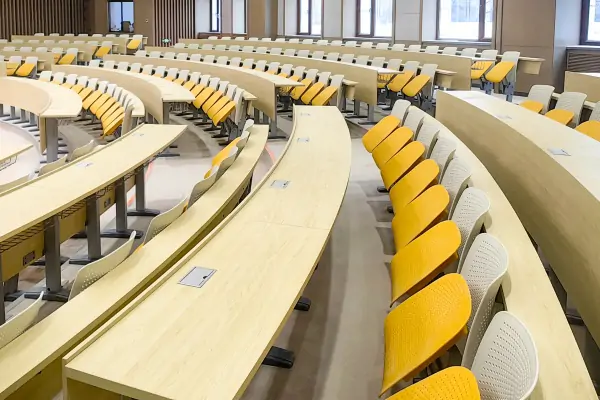
4. Flame Retardancy Rating and Ease of Cleaning
Public spaces must use fabrics with a flame retardant rating of B1 (such as linen or leather). Also check if there are fully enclosed metal panels under the seats—to prevent snack residue and chewing gum from falling into the gaps; otherwise, cleaning staff will strongly complain.
5. Convenient Maintenance Design
Vacuum-sensitive parts of university lecture hall chairs (such as seat panels and springs) should allow for single-person replacement without removing the feet. Prioritize snap-fit assembly for the seat panels and backrests, rather than rivet fixation. In addition, the ergonomic parameters of fixed seating should cover the body types of students from the 5th to 95th percentile, and the backrest angle is recommended to be 100°-105°.
In summary: When purchasing row seating for lecture halls, don't just look at the appearance of the samples. Request the manufacturer to provide bidding cases of fixed seating in similar universities within the past three years, and conduct on-site inspections of projects that have been in use for more than three years. Remember: Rebound time, writing board quality, installation, flame retardancy, and quick repair—meeting these five standards is crucial to avoiding regret after installation.